Wayne Manor
Batman the Dark Knight Returns 10th Anniversary Edition HardcoverWayne Manor is more than Bruce Wayne’s home: it is the private structure in which the continuity between Bruce Wayne and Batman is preserved, tested, and ultimately transformed. Its rooms and hidden functions connect family memory, Alfred Pennyworth’s long service, Bruce Wayne’s retirement, his return to action, and the final concealment of his survival.
Definition and Setting
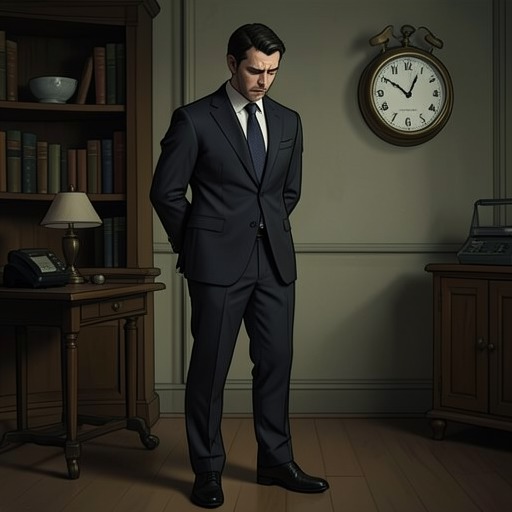
Wayne Manor stands as the domestic center of Bruce Wayne’s life, distinct from Gotham City’s streets and from the public machinery of Wayne Enterprises. In the opening material, the residence is associated with an older Bruce Wayne whose life as Batman has ended publicly but whose identity remains attached to the house and the memories it contains. The manor therefore embodies a suspended condition: it is a place of retirement without emotional release, a home that preserves the past while the city outside continues to decay.
The house also gives physical form to the division between Bruce Wayne and Batman. Bruce can remain within the mannered identity of a wealthy, aging resident while the deeper identity connected with the manor’s hidden spaces remains latent. This makes Wayne Manor a threshold between ordinary domestic life and the concealed world of Batman’s equipment, discipline, and recollection.
Memory, Retirement, and Return
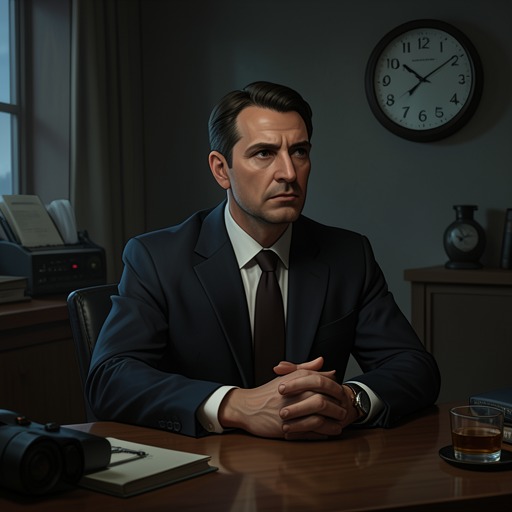
Wayne Manor is closely tied to Bruce Wayne’s aging and to the unfinished nature of Batman’s retirement. The residence holds the atmosphere of a life organized around an earlier mission, even while Bruce attempts to inhabit a quieter existence. His return is consequently not simply a decision made in the streets; it is a reactivation of what the manor has kept intact. The house provides continuity between the Batman of the past and the older man who once again accepts the necessity of intervention.
Alfred Pennyworth’s presence deepens that continuity. As servant, caretaker, and witness to Bruce Wayne’s history, Alfred Pennyworth represents the human relationship that survives across Batman’s changes of costume and status. Wayne Manor is the setting in which that relationship is repeatedly placed under strain: Alfred Pennyworth recognizes the physical cost of Bruce Wayne’s return, while Bruce Wayne treats the house and its traditions as part of the structure that sustains his purpose.
The manor’s meaning changes when Bruce Wayne’s renewed campaign expands beyond solitary action. The return of Batman brings the private world of Wayne Manor into contact with Carrie Kelley / Robin, whose emergence marks a generational shift. The house no longer signifies only an inherited past; it becomes part of the background against which a new partnership and a new version of Batman’s mission can develop.
The Manor as Operational Base
Wayne Manor is connected to the concealed infrastructure that makes Batman’s activity possible. Its relation to the Batcave places the residence at the upper, domestic level of a larger operational space: the visible home protects the hidden headquarters, while the hidden headquarters preserves the practical means of action. Equipment, planning, and the accumulated material history of Batman’s work can remain attached to the manor even during Bruce Wayne’s period of public retirement.
This arrangement also explains why the manor matters strategically. Batman’s return requires more than physical courage; it requires access to a prepared identity and to resources that can be converted into action. Wayne Manor supplies the continuity of place from which Bruce Wayne can resume investigation, preparation, and communication. The house thus links memory to logistics: what appears to be a decaying family residence also supports the reassembly of a retired vigilante’s capacity.
As the conflict spreads through Gotham City, the manor’s private function contrasts with the increasingly collective scale of Batman’s work. Bruce Wayne begins from a personal space marked by family history, but the consequences of his actions involve the Gotham City Police Department, Gotham City’s citizens, and later the wider movement associated with Batman’s followers. Wayne Manor remains the point of origin for this transformation from private inheritance to public mobilization.
Destruction, Concealment, and Succession
The later story gives Wayne Manor a decisive role in Bruce Wayne’s staged death. After the confrontation with Clark Kent / Superman, Bruce Wayne’s public identity must be separated from the continuing project represented by Batman. The destruction or apparent loss associated with Wayne Manor helps sever the visible link between the wealthy resident and the underground leader who survives beyond the official account.
This ending reverses the manor’s earlier function. At first, it preserves Bruce Wayne’s connection to the past; at the end, it becomes part of the process by which that past is concealed. The house is no longer simply a sanctuary or headquarters. It participates in a strategic disappearance designed to protect the future organization Batman has begun to build.
The final significance of Wayne Manor lies in this conversion from inheritance into transmission. Bruce Wayne does not merely return to an old home and then abandon it. Through the events surrounding his apparent death, the private world associated with the Wayne family is redirected toward a new generation and a continuing mission. Wayne Manor consequently stands at the boundary between the dead past and the concealed future: a family residence transformed into the architectural emblem of Batman’s survival beyond Bruce Wayne’s public life.